
I remember watching UFC 196, Conor McGregor vs. Nate Diaz. Everyone expected a striking masterclass from McGregor, but Diaz, a notorious grappler, secured a rear-naked choke in the second round. The arena erupted. McGregor, the seemingly invincible force, tapped out. It was a stark reminder: in the UFC, brute strength isn’t always king. The choke submission reigns supreme, a sudden, silent, and often unexpected path to victory.
Chokes, more than any other submission, carry an element of surprise. A fighter can be dominating a bout, only to find themselves suddenly trapped, the air supply cut off, and forced to tap out. Their efficacy lies in the technique, precision, and timing, not just raw power. Here, we’re going to dissect the world of UFC chokes, exploring the nuances behind a successful submission, and discover why, in the octagon, a well-executed choke is one of the most dangerous weapons a fighter can wield.
The Anatomy of a Tapout: Why Chokes Work
Choke submissions are a staple in mixed martial arts, forcing opponents to tap out due to the interruption of vital functions. These submissions primarily work through two mechanisms: blood chokes and air chokes.
Blood chokes, the more common type seen in the UFC, target the carotid arteries in the neck. These arteries are responsible for carrying blood to the brain. When compressed, blood flow is restricted, leading to rapid oxygen deprivation in the brain. This oxygen deficiency triggers a cascade of effects. Consciousness is usually lost within seconds, typically between 5 to 10 depending on individual physiology and the precision of the choke.
Air chokes, on the other hand, obstruct the trachea, the airway that carries air to the lungs. These chokes prevent breathing, leading to a slower and more painful submission. Because the body has some oxygen reserve, it takes considerably longer to render someone unconscious with an air choke, typically 30 seconds or more. The restricted airflow leads to panic and a desperate need for oxygen, making it a less efficient and more stressful method of submission compared to the swift and decisive action of a blood choke. Efficient blood chokes are favored for their speed and relatively lower risk of prolonged damage when applied correctly.
The Reigning Choke Submissions of the UFC
Rear-Naked Choke (RNC): The King of Submissions
The rear-naked choke, often hailed as the king of submissions in the UFC, is a formidable technique applied from back control. This blood choke works by constricting the carotid arteries on both sides of the neck, rapidly cutting off blood flow to the brain. Fighters often secure back control after a takedown, scramble, or by taking the opponent’s back against the cage. From there, one arm encircles the opponent’s neck while the other secures the bicep, forming a tight seal. The choking arm’s bicep presses against one side of the neck, and the forearm of the other arm presses against the other side, completing the choke.
Variations exist, including the body triangle, which further secures back control. A prime example of the RNC’s effectiveness is seen in numerous UFC fights. For instance, Khabib Nurmagomedov’s dominant win over Justin Gaethje at UFC 254, where he secured the RNC to unify the lightweight title, demonstrated the choke’s power and reliability.
Triangle Choke: Trapping and Triangulation
The triangle choke is a submission executed from the guard, utilizing the legs to create a constricting triangle around the opponent’s neck and one arm. The setup usually begins with the fighter on their back, wrapping one leg around the opponent’s neck and the other around their shoulder, creating a triangular shape. Crucially, the legs, not arm strength, apply the pressure. The fighter then locks their ankles together, cinching the choke. This cuts off blood flow in the opponent’s carotid arteries, leading to a submission.
Entry variations include setting it up from a failed armbar attempt or during a scramble. One memorable example is Nate Diaz’s victory over Kurt Pellegrino at UFC Fight Night 13. Diaz masterfully locked in the triangle choke, forcing Pellegrino to tap out and showcasing the technique’s effectiveness.
Guillotine Choke: The Standing Surprise
The guillotine choke is a versatile submission that can be applied from various positions, but it is particularly known as a standing surprise. It involves encircling the opponent’s neck with one arm, then locking the hands together to form a tight grip. The choke works by compressing the trachea and carotid arteries, restricting both airflow and blood flow. The standing guillotine is often initiated when an opponent shoots for a takedown. The defender wraps their arm around the opponent’s neck during the sprawl, locking their hands, and pulling guard to tighten the choke.
There are arm-in variations of the guillotine. A notable example is Conor McGregor’s finish of Dennis Siver at UFC Fight Night 59 when McGregor locked in a standing guillotine. This submission highlighted the choke’s potential as a fight-ending maneuver.
Anaconda Choke: Squeezing the Life Out
The anaconda choke is a blood choke applied from a front headlock position. It involves wrapping one arm around the opponent’s neck and threading it under their armpit, linking it with the other hand to form a tight grip. To execute the choke, the fighter often rolls to their side, using their body weight to tighten the constriction around the opponent’s neck and shoulder. This pressure restricts blood flow to the brain, forcing a tap. The set up typically starts when controlling an opponent’s head. Then the fighter drapes his arm. After that, he rolls to maximize the choke.
A classic example of the anaconda choke in action is Antonio Rodrigo Nogueira’s win over Tim Sylvia at UFC 81. Nogueira secured the anaconda choke. It secured him the interim heavyweight title, proving its effectiveness at the highest levels of competition.
D’Arce Choke: The No-Gi Specialist
The D’Arce choke, a variation of the arm triangle choke, is particularly effective in no-gi grappling scenarios. Like the anaconda choke, it begins from a front headlock position, but the arm positioning is different. Instead of wrapping the arm around the neck and under the armpit, the fighter threads their arm under the opponent’s arm and over their shoulder, securing a grip on their opposite bicep. To finish the choke, the fighter squeezes their arm and shoulder together, applying immense pressure to the opponent’s neck and shoulder, cutting off blood flow.
The D’Arce choke allows for a forceful approach. This often leads to a quicker tap-out compared to other chokes. A notable example is Tony Ferguson. He has several D’Arce choke finishes in his UFC career. That emphasizes the choke’s fight- ending potential in no-gi contexts.

Case Studies: Notable Examples of Chokes Leading to Shocking Taps
The world of UFC is filled with displays of athleticism and power, but often, it’s the subtle art of submission that dictates the outcome. Chokes, in particular, have a knack for producing shocking tapouts, moments where victory seems assured for one fighter, only to be snatched away in a sudden, constricting grip. These upsets are not just about brute strength; they are a testament to strategic brilliance and the element of surprise.
Take, for example, the fight between Diaz and McGregor. Diaz, initially considered the underdog, weathered an early storm from McGregor, absorbing powerful strikes and maintaining composure. However, Diaz, seemingly outmatched on his feet, turned the tide with a well-timed takedown attempt. Diaz transitioned seamlessly to a rear-naked choke. McGregor, known for his striking prowess, found himself in unfamiliar territory. The choke tightened, and the shock rippled through the arena as McGregor tapped, signaling an unexpected defeat. Diaz’s victory wasn’t about overpowering McGregor; it was about exploiting a weakness and capitalizing on a moment of vulnerability.
The key to Diaz was his ability to disguise his intentions. He didn’t telegraph the takedown, making it difficult for McGregor to anticipate and defend. Once on the ground, Diaz didn’t rush the submission. He patiently established position, softened McGregor up with ground and pound, and then, with calculated precision, locked in the choke. Securing a choke like this often comes down to controlling the opponent’s wrists and creating the necessary angle to slide the arm under the chin. Constant pressure and adjustments are crucial; don’t give your opponent any space to breathe or escape.
Beyond Technique: The Mental Game of Chokes
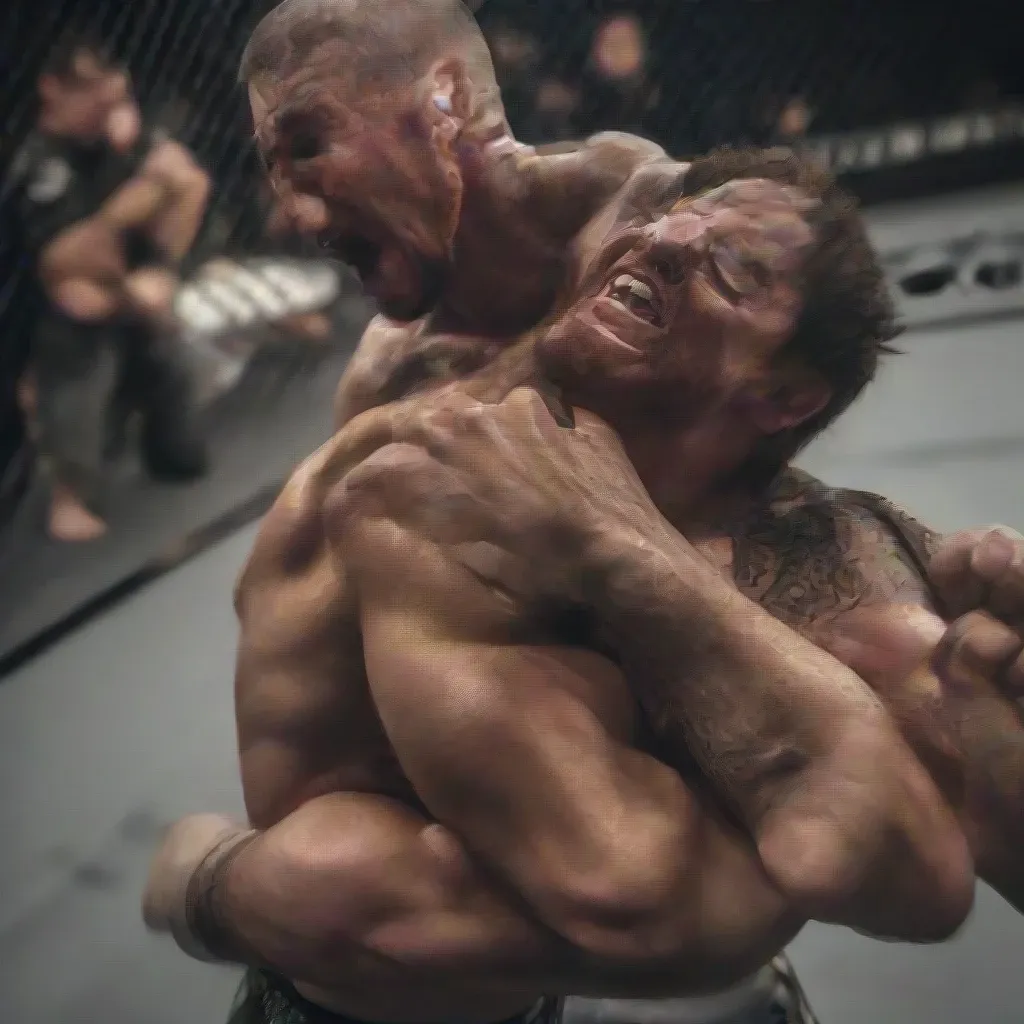
The choke, beyond its mechanics, is a brutal test of will. It’s a place where physical technique meets raw, unadulterated psychological warfare. Applying a choke isn’t just about blood flow; it’s about applying pressure, instilling fear, and ultimately breaking the opponent’s mental fortitude. When locked in a tight choke, a fighter experiences a primal fear – the fear of losing consciousness. That fear can be a powerful weapon in the hands of the attacker. A skilled grappler uses this fear, tightening the squeeze not just on the neck, but on the mind.
Submission defense, therefore, isn’t just about escaping holds; it’s about managing the immense pressure. Mental toughness is paramount. Fighters must learn to control their panic, regulate their breathing, and maintain focus under extreme duress. Cultivating this mental fortitude involves rigorous training that simulates the stress of a real fight. Visualization techniques, where fighters mentally rehearse escapes and successful defenses, are crucial. Moreover, understanding fight psychology – recognizing an opponent’s tells, exploiting their weaknesses, and controlling the pace of the exchange – plays a vital role in predicting and countering choke attempts. In the world of grappling, the mind is the ultimate battleground, and the choke is its most potent weapon.
Evolving Strategies: Counters and Defenses
The world of mixed martial arts, particularly within the UFC, is in constant flux. It’s a high-stakes chess match where fighters and their coaches are continuously developing and refining not just offensive maneuvers, but also, and perhaps more crucially, choke defenses and submission counters. No single technique remains unchallenged for long; as soon as a submission becomes prevalent, the race to find its weakness begins.
Effective choke defense isn’t just about brute strength; it’s a blend of technique, anticipation, and strategic thinking. For example, against a rear-naked choke, common defenses include hand fighting to break the grip, turning into the opponent to alleviate pressure, or even utilizing a well-timed slam (where legal) to disrupt the hold. Similarly, escaping a triangle choke often involves posturing up to relieve pressure on the carotid arteries, creating space to slip a limb free, or stacking the opponent to force a break. The guillotine choke can be countered by maintaining a strong posture, preventing the opponent from fully closing the guard, and using hand techniques to peel the grip away from the neck.
The grappling evolution is driven by the constant need to adapt. Fighters drill escape techniques relentlessly, building muscle memory and developing the split-second reactions necessary to survive in the cage. Moreover, they don’t only focus on defense; they actively seek submission counters. A failed armbar attempt could be turned into a kimura, or a defended triangle choke could open up opportunities for sweeps and positional advancements. The key is to view every defensive situation not just as a means of survival, but as a potential gateway to offense.
How to Improve Your Choke Game
Chokes are fight enders. Mastering them is the difference between a tap and a loss. I’ve seen countless fighters, myself included early on, rely on brute strength instead of technique when going for a choke. That’s a recipe for gassing out and failing. Here’s how to sharpen your choke game and make those submissions tighter than ever.
First, ditch the death grip. A proper choke isn’t about squeezing with all your might. It’s about precise placement and leverage. Think of it like this: you are trying to cut off blood flow, not crush a watermelon. Focus on getting a deep grip, securing the position, and then applying steady, controlled pressure. I used to squeeze with my biceps, completely exhausting myself. Now, I focus on using my whole body to generate the pressure.
Next, drilling is your best friend. Don’t just haphazardly slap on chokes during sparring. Dedicate specific training time to drilling choke techniques from various positions. Here is one of my go-to submission training drills: Start in mount, transition to S-mount, secure the arm triangle, and finish. Repeat this 10-15 times on each side. Focus on speed and precision.
Another common mistake I see is neglecting the setup. A choke is rarely just given. You need to create the opportunity. This might involve using strikes to open up the neck, chaining submissions, or simply using superior positioning to force your opponent to expose their defenses. Think of each choke as the final move in a well-orchestrated sequence.
Finally, record your sparring sessions. Watch them back and analyze what you are doing wrong. Are you telegraphing your intentions? Are you leaving openings for your opponent to escape? Be honest with yourself and identify areas for improvement. Consistent self-assessment is key in MMA training to see massive improvements in your choke game.
Take these grappling drills to refine your BJJ techniques and see your submission skills skyrocket.
Conclusion
Mastering choke submissions in the UFC demands a blend of technical precision, strategic thinking, and unwavering mental fortitude. The journey from learning the fundamentals to executing fight-ending chokes on the world’s biggest stage is paved with relentless drilling and a deep understanding of human anatomy. The ability to recognize opportunities, transition seamlessly, and maintain composure under pressure separates the good from the truly great. As the UFC’s submission game becomes increasingly sophisticated, fighters who dedicate themselves to continuous learning and adaptation will be the ones most likely to achieve lasting success by squeezing their opponents until they tap. To master this ability go to the gym now!